
Ask any guru about how to overcome the skilled labor shortage. Their answer will likely involve a robot. The promise to improve manufacturing with less human input is a cost-cutter’s dream.
But do the big promises of a robotic future compute to a net benefit? Or are we just exchanging one set of problems for another?
On Site with the Future
Here’s an example from a plant I visited.
This was the flagship project to replace humans in material handling jobs. It automated most of their product control and flow through the plant. In theory, replacing human decisions with predetermined logic should reduce accidents and rework.
Then I walked in the plant.
Just feet from the entrance, I saw a line of robots lining up behind one another. The first in line was carrying a product buggy to a bay that was already filled.
The robot couldn’t figure out how to move to the next bay over. It sat there until the bay opened up.
As I waited for an operator to notice this condition, another 5 robots queued behind the first. All were struggling with the same problem: there’s no room to move because something is blocking my way.
Finally, an operator retrieved the buggy. The first robot set down its load and moved on to its next task.
Then guess what happened next…
The second robot in line found a buggy in the bay. It couldn’t set its load down, either.
But management’s view of the problem? They didn’t have enough robots.
Same Problems, New Technology
Now, this traffic jam wasn’t from an unsophisticated product.
These robots had top-of-the-line sensors and safety controls. They followed their path without running over humans who walked in front of them.
But the robots stopped when processing too many instructions at once. Much like humans with too much to think about.
This was a workplace design issue. Scaling the cost-saving solution without realizing how much instructions would conflict with each other ended up leading to more costs.
Much like getting a frozen human going again, the plant needed a highly skilled technician (or two) on each shift to help correct robots who lost their way.
So what makes a highly-skilled, well-paid robot technician any different from a highly-skilled, well-paid doctor treating a sick patient?
And what separates a charging station from a restaurant and a bed?
Humans and robots still need to rest and recharge. They still both need to learn their tasks. And they still need to be saved when processing too many instructions.
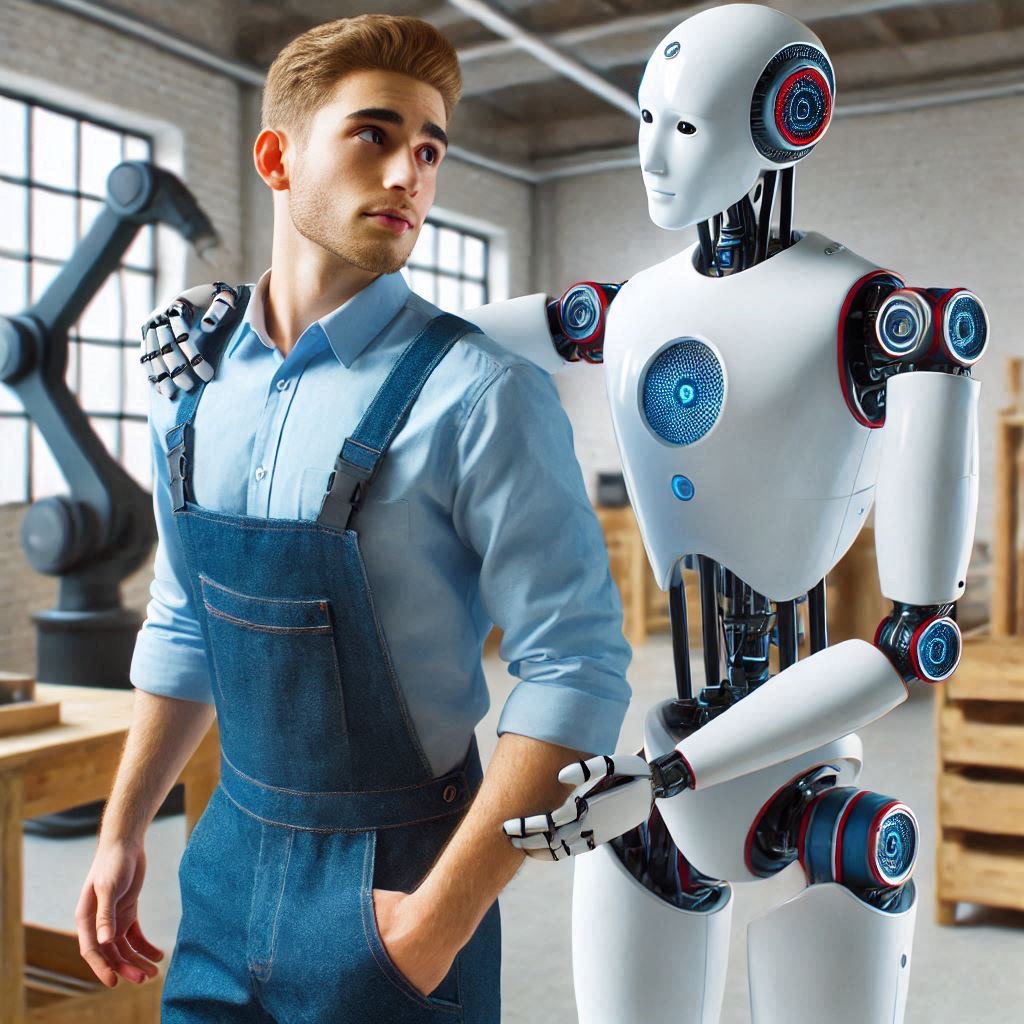
(credit: Microsoft Copilot)
And that need for input holds the opportunity.
Future-Proofing
So, how does an owner robot-proof an industrial services company? Much of it is the same foundation needed to bring in robots in the first place.
Do simple things with excellence.
Working safely and doing a quality job are more important than ever. And very few perform to this level now. Work ethic is the perennial way to set yourself apart. Especially if you can find the empty bay in the next slot over.
Build your strategy.
Center this around delivering differentiated services at reasonable prices. And make sure you deliver more value than your customer paid. As they say, cheap work isn’t always good and good work isn’t always cheap.
Stay in contact with your customers.
Don’t limit your touchpoints to the times you need more work. Understand their needs and what separates you from your competitors in their eyes. Use this information to continue delivering value beyond expectations.
One thing you can do today to get in the door with your manufacturing customers? Hire a trusted marketing professional who can speak to these strengths.
Then perform for them and they’ll bring you back. Those relationships are the best way to robot-proof your business.
Are you ready to talk to your customers in a way that robot-proofs your business? Book a call with me today to learn more.
 Promethian Impulse, LLC
One thought on “Should Industrial Services Worry About a Robot Takeover?”