

Does your community feel more divided these days?
It hurts. Especially when we want peace with our neighbors. And we tend to want things now.
But forcing division away for its own sake doesn’t help, either. All that does is promote an out-group over an in-group.
Something meaningful needs to take its place. What about finding and serving others in need?
That is a noble goal for business. After all, if we haven’t turned off that part of ourselves, it hurts to see others suffer. But larger businesses have taken lot of backlash for leading the conversation.
Big companies are reaching the limits of their growth. At this size, we expect them to make more opportunity for everyone. A practice known as equity.
Would small businesses fill this gap better?
Where Equity Fails
And it sounds good. People without those opportunities can struggle to make their own. No one likes to see that cycle of poverty.
But companies starting out realize outsized returns when hiring one more person. As it reaches max scale, new hires won’t deliver nearly the same margins.
With that constraint, benefitting an out-group comes at the expense of an in-group. Also known as distribution.
Why does this happen?
Big companies favor overspecialization to operate. Transactions become so complex, management needs reliable specialists for individual tasks.
And then, that specialist gets more to do. You can’t only focus on operations. You have to know all the safety and environmental rules. You have to make efficiency improvements. You have to make a positive mark on the culture.
When that skill is no longer in demand or the field is too crowded, overspecialization leads to despair. And layoffs.
I don’t know about you, but living in a narrow range of knowledge until my skillset lost its value would make me bitter.
And given the complexity of this system, that’s more likely the culprit.
People who are cognitively busy are also more likely to make selfish choices, use sexist language, and make superficial judgements in social situations.
– Daniel Kahneman, Nobel Laureate, Author of “Thinking Fast and Slow”
We mean well, but we strain to pick up one more thing and still perform at the same level. Which means the big lift to retool processes isn’t working. Even backfiring.
What if we thought smaller?
Lessons from a Shanty Town
A few years ago, I had an opportunity to take a consulting trip to Diepsloot in South Africa. This place was straight out of the movie District 9. Without the extraterrestrials.
While I toured the area, I noticed two distinct groups. Many people came from neighboring countries looking for opportunities with the mines. This is where the big money and (mostly) stable jobs were.



“Were” because coming back from the 2008 commodities crash was slow going.
Foreigners waited around for jobs to open. Citizens took government subsidizes or low-skill jobs until the opportunities came back. (Think bathroom attendants)
Meanwhile, every big-name global consultancy and heavy construction firm set up shop nearby. These companies were most likely to build what would “lift” everyone in the area out of poverty. But they hadn’t found the right project.
The other group, though, really caught my attention.
They built shops with whatever they could find. They sold flavored corn balls, drinks, haircuts, cell phone minutes and charging stations, and housewares.
I even saw someone welding auto bodies with a car battery.



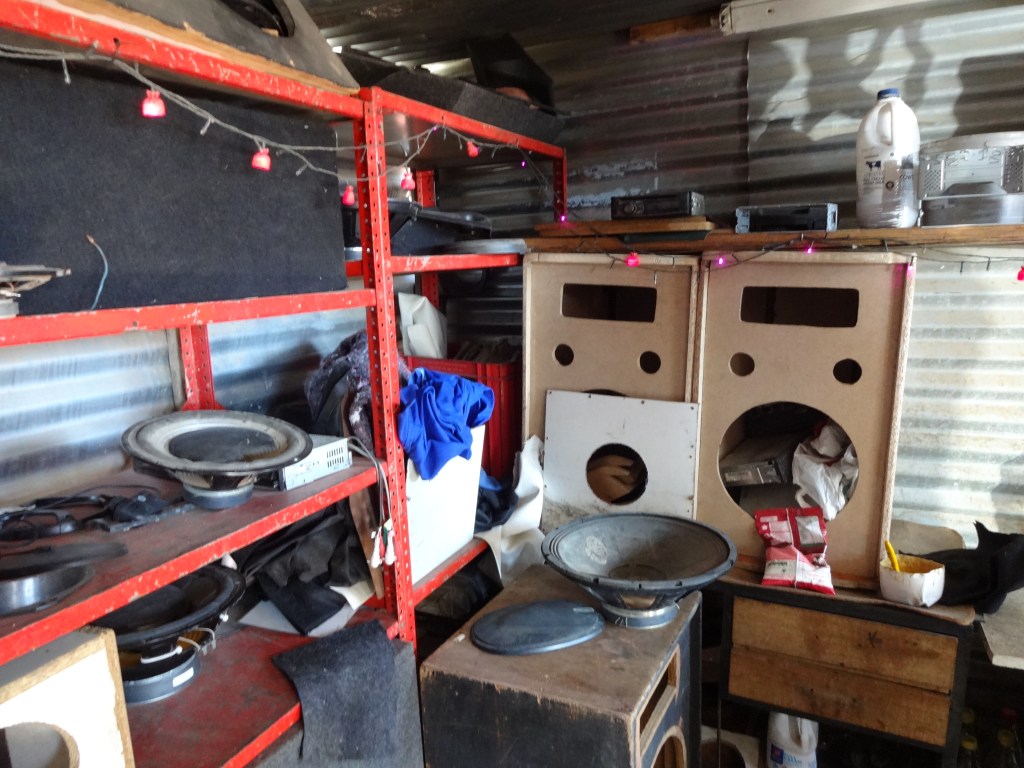

These are the people who used the resources around them to serve others. To us in the Western World, we wouldn’t consider it. But when you use what’s available around you in a way that people with deeper pockets can’t see, you can scale faster with less resources.
You will get all you want in life if you help enough other people get what they want.
– Zig Ziglar
Sure. They may have left their enterprises when a spot opened at a mine. But the important part was they didn’t wait to start adding value to people around them. They dove right in and found out how to address their neighbor’s needs.
Do What You Love…Freely
So there will be those big companies who stick to the resources they committed to retool their processes. That’s how they’re designed to succeed. But these equity practices corral an out-group into a desired skillset.
People who join a lucrative path for the money will burn out. And forced conformity doesn’t produce the same outcome for everyone. Those are just golden handcuffs.
But for a quicker answer, small businesses are better positioned to help their neighbors. They already jumped into meeting their community’s needs and have the proximity to meet people at their interests. And people seek to learn what interests them.
Just one suggestion in this relationship can uncover an opportunity someone wouldn’t have considered. It costs nothing for a small business owner to hand a business card to a job-seeker when you overhear a need. Not to mention it’s a more natural way to fill an opening.
Equity cut its teeth combating the creation of out-groups. But equity happens when one person extends a hand to another and recognizes their shared humanity.
So practice reaching out daily. The closer to home and the more actionable, the better.
Excited to put this into practice, but need a safe environment? Attend this upcoming webinar with the Intercultural Leadership Institute to learn how to grow with your neighbors.
 Promethian Impulse, LLC